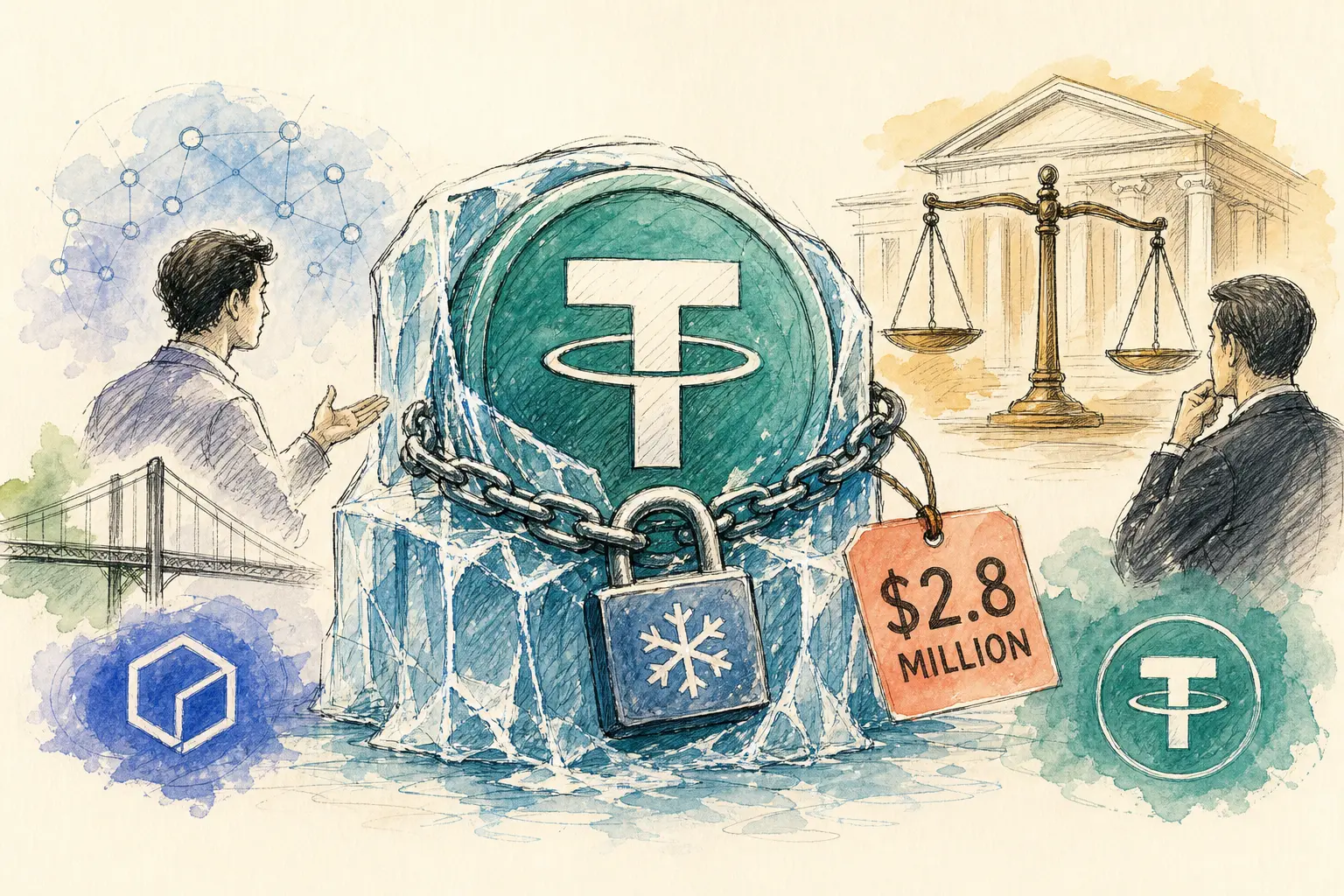
Tether is facing a legal challenge from Conduit after the payments company said $2.8 million connected to its platform was frozen without explanation. The dispute matters because it highlights a central issue in stablecoin infrastructure: who can control funds, and under what circumstances.
What Conduit says happened
According to the complaint described in the source material, Conduit alleges that Tether froze the funds and did not provide a clear reason. The amount at issue is $2.8 million.
Tether issues USDT, a stablecoin. Stablecoins are digital tokens designed to track the value of a traditional currency, usually the U.S. dollar. Because they are used for payments and transfers, any ability to freeze or restrict them can affect users, businesses, and counterparties that rely on them for settlement.
Why this dispute matters
The case is not only about one account or one balance. It speaks to a broader operational question in crypto payments: how much discretion an issuer should have to intervene in token movement.
For businesses using stablecoins, the practical concern is predictability. If funds can be frozen without a detailed explanation, companies may face delays, compliance uncertainty, or difficulty reconciling customer payments.
The wider legal backdrop
The extracted source also notes a separate legal development: the U.S. Department of Justice is invoking the Bitcoin Fog ruling in a matter that could affect Roman Storm’s acquittal bid. That issue is distinct from the Conduit-Tether dispute, but it sits within the same broader conversation about enforcement, liability, and crypto infrastructure.
What readers should watch
The key questions now are straightforward:
- Whether Tether explains why the funds were frozen
- How the court treats Conduit’s claims
- Whether the case clarifies the limits of issuer control over stablecoin balances
For companies that depend on stablecoins, the outcome could influence how they think about platform risk, payment reliability, and operational safeguards.