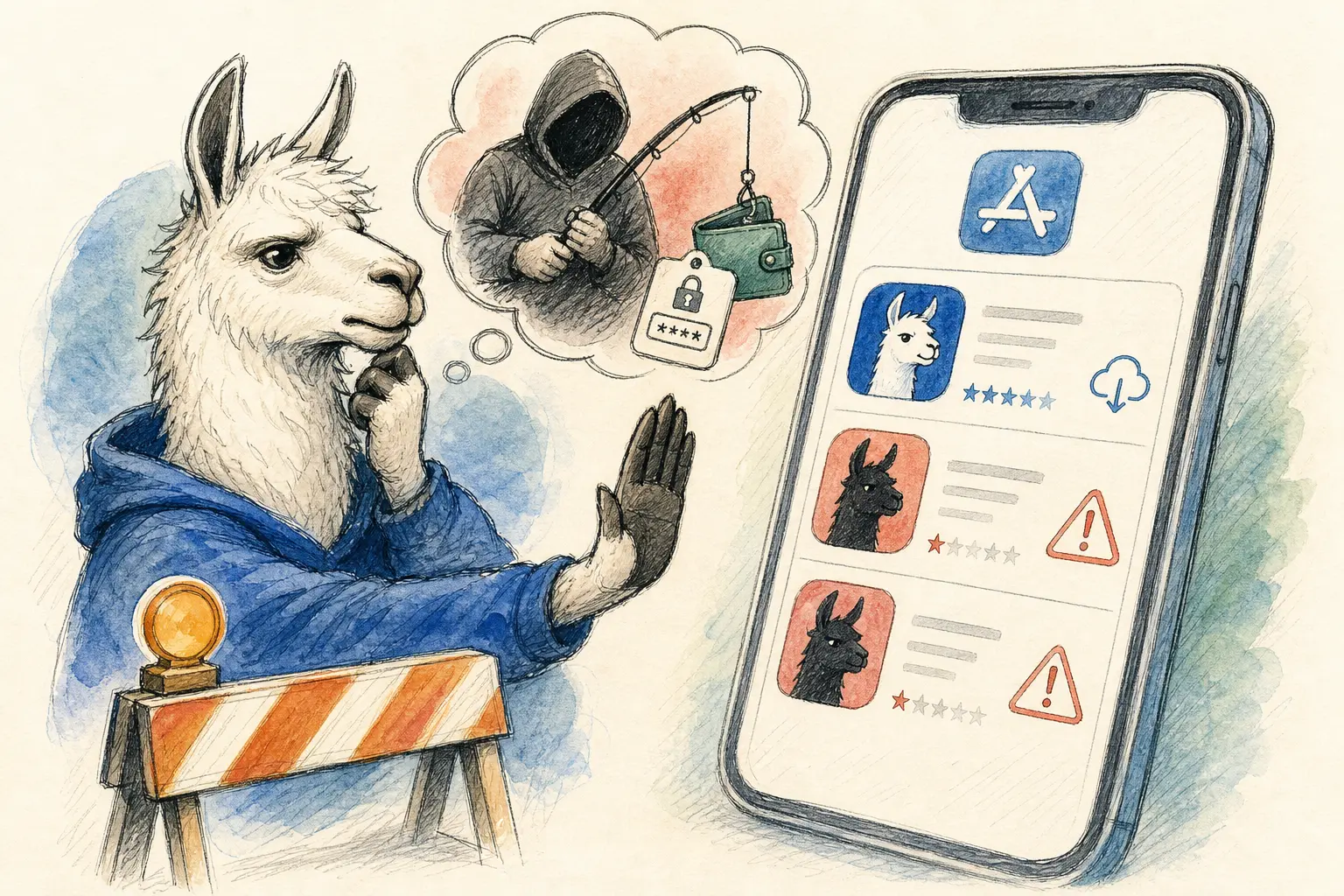
DefiLlama delayed its mobile app launch after spotting phishing-style lookalike apps in Apple’s App Store, according to founder comments. The decision highlights a practical problem for crypto products: even approved app stores can host clones that try to imitate legitimate services and steal user access.
What happened
The company said it chose not to move ahead with its mobile rollout once it noticed apps in the store that appeared to be phishing attempts. In this context, phishing means a deceptive app or site designed to trick people into revealing credentials, wallet details, or other sensitive information.
The concern was not simply that copycat apps existed, but that they were present in a high-trust environment where users often assume listings have already been screened. For crypto services, that assumption can be risky because a single fraudulent login can lead to lost funds or compromised accounts.
Why this matters for crypto apps
Crypto platforms face a version of the old phishing problem with higher stakes. Users may connect wallets, enter recovery phrases, or approve transactions inside a mobile app, so a convincing imitation can be enough to cause damage.
A delayed launch in this case signals a conservative product decision: it may be safer to pause than to release into a marketplace where impersonators are already visible.
The broader takeaway
The episode shows that app store presence alone does not eliminate impersonation risk. For teams building financial or crypto tools, launch planning now has to include monitoring for fake listings, user education, and rapid takedown responses as part of basic safety work.