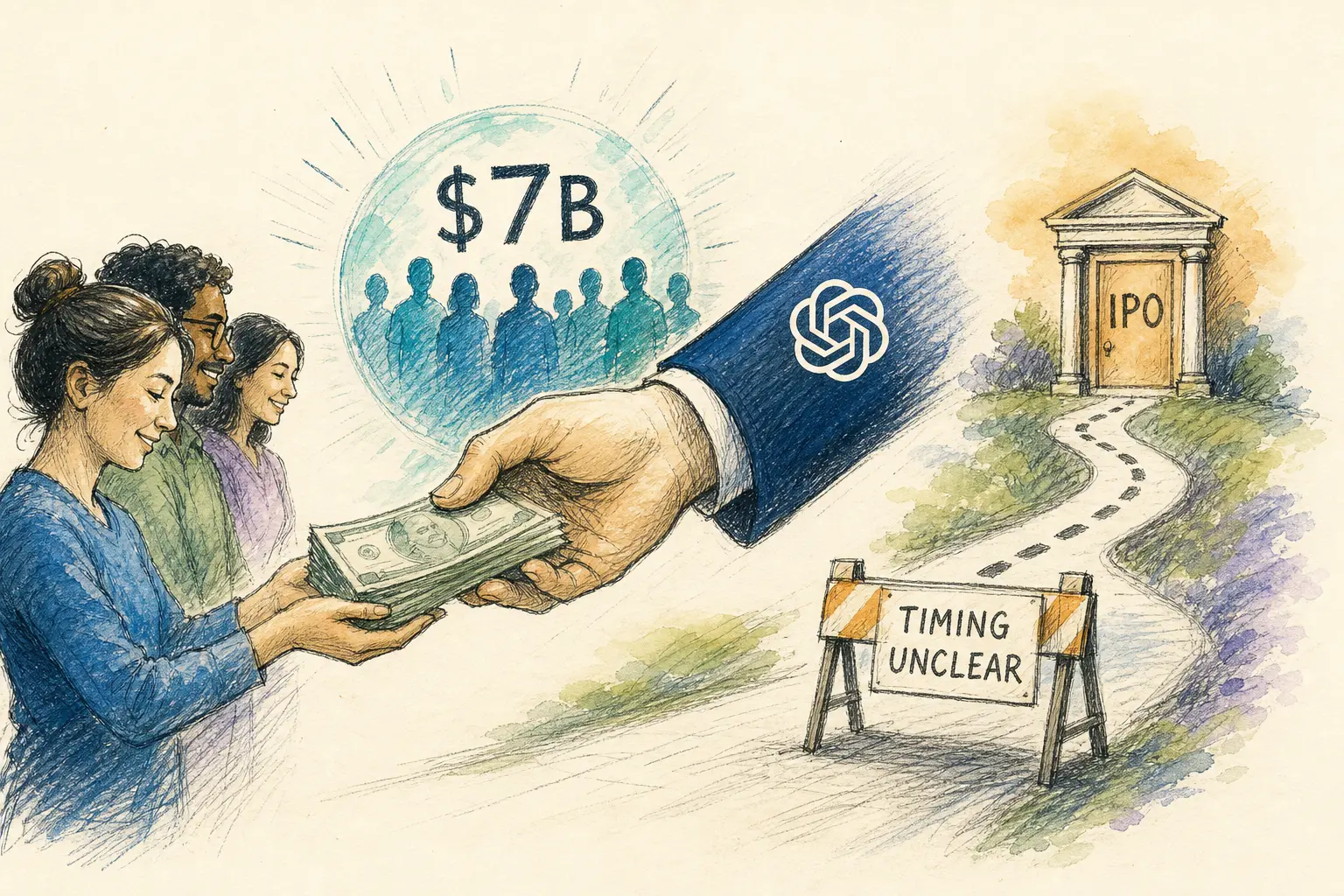
OpenAI has reportedly completed a $7 billion tender offer for employee shares, a move that gives workers a way to cash out stock without waiting for an initial public offering. The transaction also keeps the company valued at $852 billion, matching its most recent fundraising round.
Why the deal matters
A tender offer is a private transaction in which a company or outside buyers purchase shares from existing shareholders. In this case, the main significance is not only the size of the buyback, but what it can signal: OpenAI is creating liquidity for employees while still staying private.
That matters because startups that remain private longer often use secondary sales like this to help employees realize the value of their equity compensation. It is a practical alternative to an IPO, which comes with more regulatory scrutiny, public reporting requirements, and market pressure.
What is known about OpenAI’s plans
OpenAI confidentially filed with the U.S. Securities and Exchange Commission in June to prepare for a possible IPO later this year. But the tender offer suggests a public debut may not be imminent.
 The company did not comment by publication time.
OpenAI’s valuation in the buyback appears to track its March fundraising round, which added $122 billion to its war chest. That keeps the company among the most highly valued private technology firms.
How the move fits OpenAI’s current position
The tender comes as OpenAI is under pressure to show financial momentum. CEO Sam Altman recently said the company “did not have our best 12 months ever,” and The Wall Street Journal reported in April that OpenAI missed internal financial targets.
The company’s path to the public markets may also be influenced by competition. Anthropic, a rival in the frontier AI market, has reportedly been profitable, raising the stakes for how OpenAI presents its business profile if and when it does pursue an IPO.
Another possible factor is strategy. The buyback may be consistent with a period in which OpenAI is narrowing priorities and trying to strengthen its enterprise business before taking the next major step toward the public markets.
What readers should watch next
The key questions are whether OpenAI continues using private-market liquidity programs for employees, and whether the company moves closer to a public listing or delays it further. For now, the $7 billion tender offer suggests OpenAI is balancing two goals at once: rewarding staff and preserving flexibility on timing.