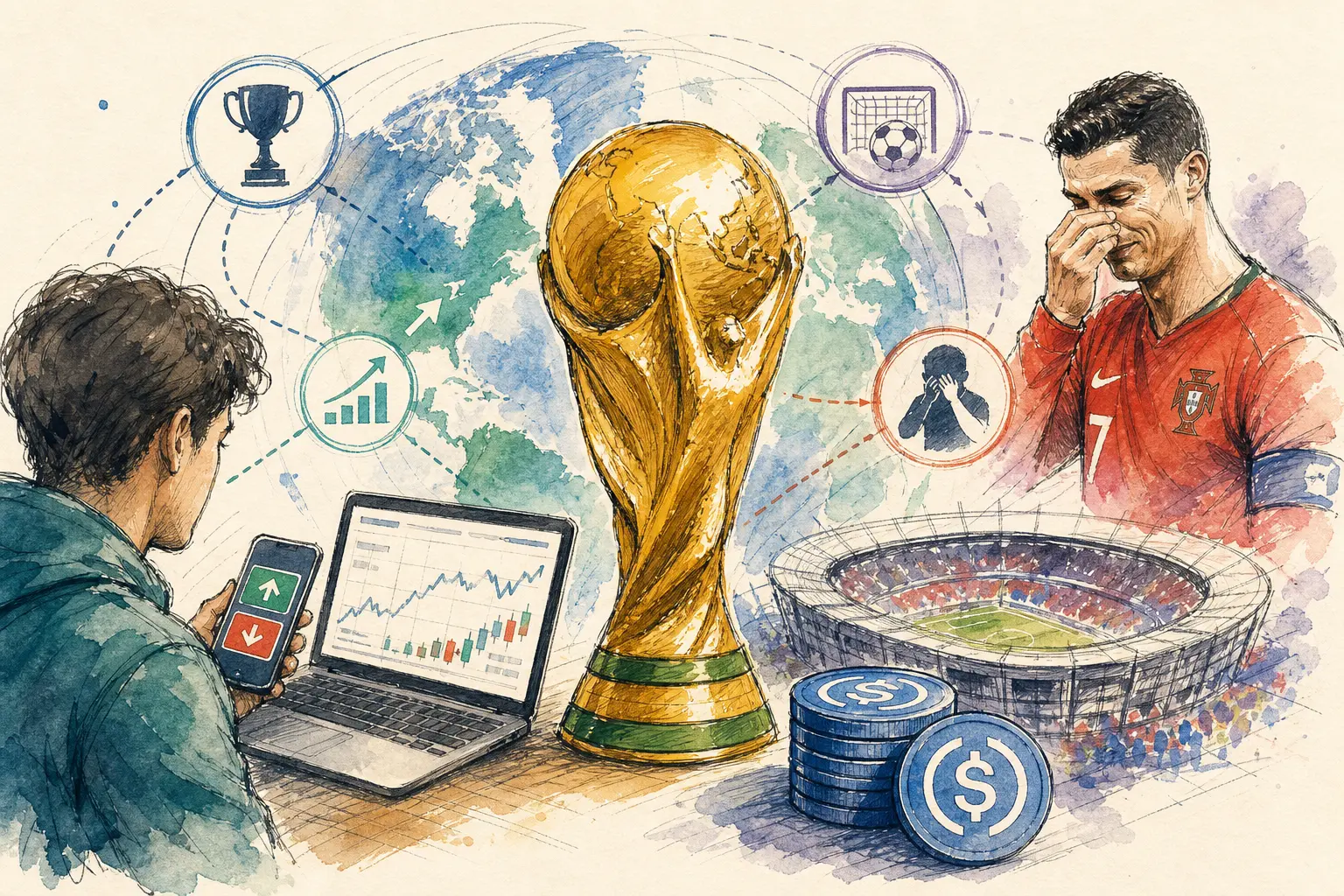
The 2026 FIFA World Cup became the largest prediction market event on record, with blockchain analytics firm Chainalysis estimating $20 billion in volume. That scale matters because it shows how quickly prediction markets can grow when a global event attracts broad attention and repeated trading.
What Chainalysis said
In a Thursday report, Chainalysis said the World Cup drew activity from nearly 400,000 wallets starting in January 2026. Of that total, $5.7 billion in volume was generated during the tournament itself.
Prediction markets are contracts that let people trade on the outcome of future events. When the event is resolved, the contract settles based on the result.
Why the World Cup stood out
The tournament’s volume dwarfed other recent prediction market events. Chainalysis said it surpassed the $3.6 billion traded around the 2024 U.S. presidential election, which had been the previous benchmark cited in the report.
Other major event markets also crossed the billion-dollar mark, including Super Bowl 60 in February and the NCAA basketball tournament known as March Madness.
What people were betting on
The range of contracts reflected how prediction markets have expanded beyond straightforward winner-takes-all questions. Markets covered topics from the tournament champion to more unusual event-specific outcomes, including whether Cristiano Ronaldo would cry after Portugal’s elimination.
The broader market context
The report also underscores the role of blockchain infrastructure in prediction markets. Polymarket, the leading platform mentioned in the report, operates on blockchain rails and uses the stablecoin USDC for trading and settlement. A stablecoin is a cryptocurrency designed to track a fixed value, typically the U.S. dollar.
The scale of activity comes as prediction market platforms continue to attract investor attention. Polymarket was valued at $15 billion in funding discussions in April, while rival Kalshi has reportedly been seeking a $40 billion valuation in recent investment talks.
For now, the main takeaway is simple: major live events can turn prediction markets into very large trading venues, and the World Cup has become the clearest example so far.