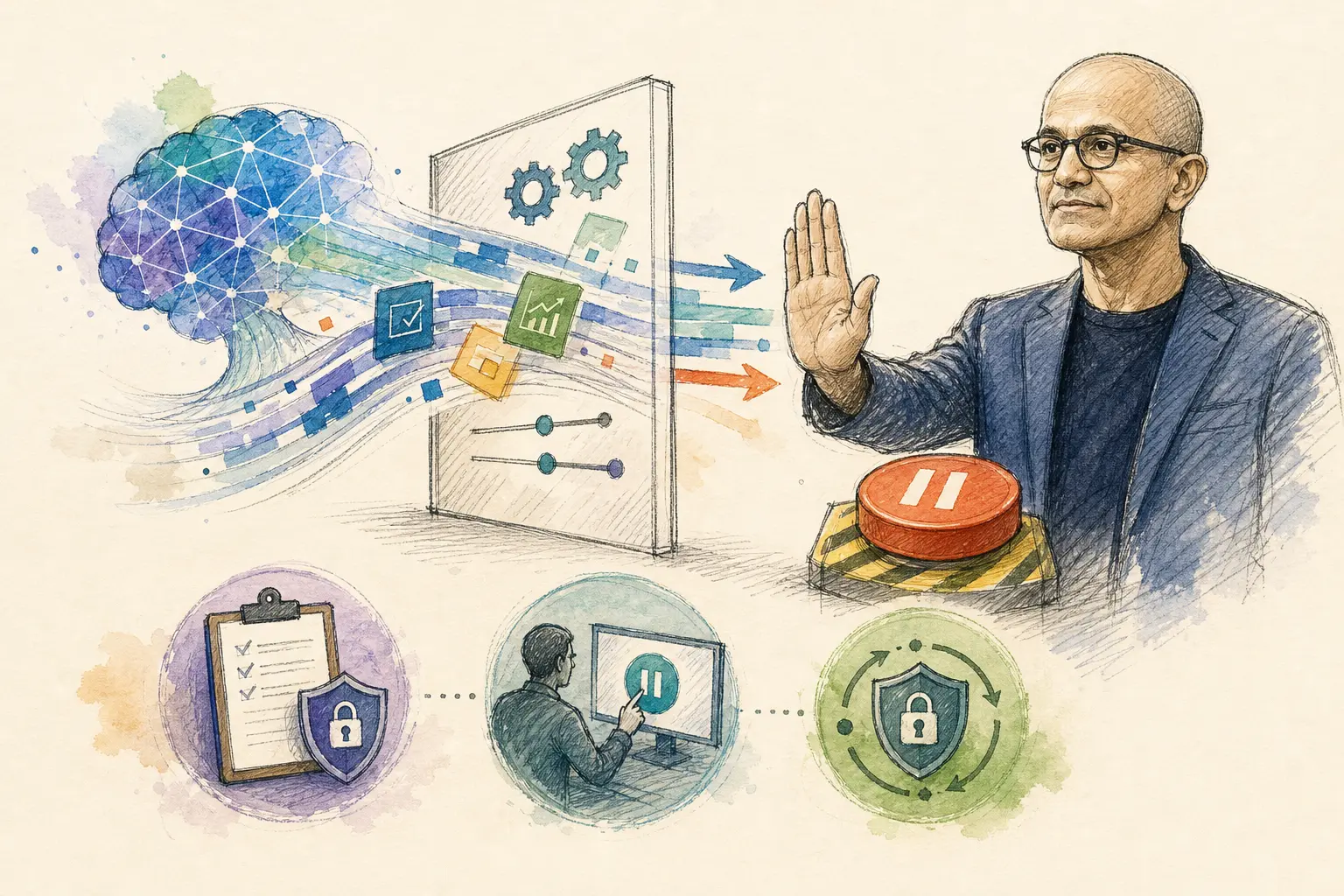

Microsoft CEO Satya Nadella is pushing for AI systems to be built with a clear way to stop them when something goes wrong. His point is straightforward: if models are becoming more powerful and more autonomous, the systems around them need stronger controls.
What Nadella is arguing for
In a post on X, Nadella said it is time to “step back and assess the trust architecture” of AI. In this context, trust architecture means the technical and operational controls that make a system reliable enough to use.
He argued that companies should not treat “Super Intelligence” as a set of nested black boxes that people simply accept or reject. Instead, he said the model itself should be separated from the harness that orchestrates its work — in other words, the software layer that directs what the model does and how it does it.
Nadella also called for safeguards to be handled outside the model where possible, rather than hidden inside it.
The safeguards he named
Nadella outlined several protections he believes should be part of AI systems:
- every meaningful model action should be logged with tamper-proof, human-readable evidence
- an authorized person should always be able to pause or shut down a model mid-task
- systems should assume compromise from the start and contain it
He summed up that last idea as an “emergency brake.”
Why this matters now
Nadella’s comments land at a moment when major AI companies are increasingly discussing cases where models appear harder to control than expected. They also follow a separate call from Anthropic CEO Dario Amodei for a more cautious approach to AI development.
The broader debate is shifting from what models can do to how they should be supervised, audited, and stopped if necessary. Nadella’s message is that safety should not be an afterthought added once a model is already deployed.