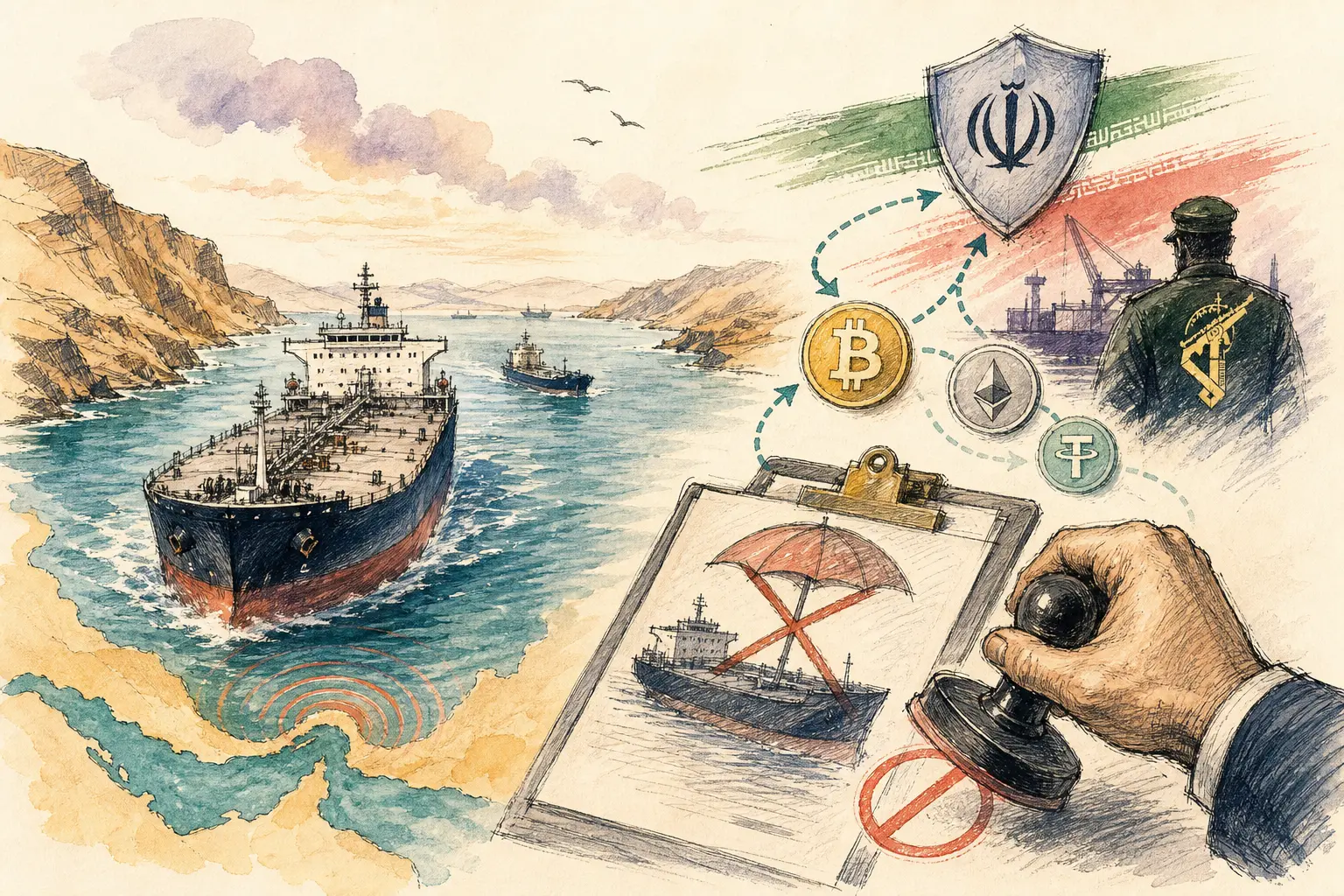
The U.S. Treasury has sanctioned two Iranian maritime firms it says ran an insurance operation designed to move money to the Islamic Revolutionary Guard Corps (IRGC) while helping vessels pass through the Strait of Hormuz.
The action matters because the Strait of Hormuz is a critical energy corridor, and Washington is treating the alleged insurance model as both a sanctions-evasion channel and a payment system that reaches into crypto.
What Treasury said
Treasury’s Office of Foreign Assets Control designated:
- Persian Gulf Marine Insurance Company
- HormuzSafe Marine Services Authority, known as Hormuz Safe
According to Treasury, the firms were part of an arrangement that was closer to extortion than insurance. The department said ships transiting the strait were pushed to buy coverage for risks such as seizure that, Treasury argued, are largely created by Iran itself.
Treasury also said Hormuz Safe accepted bitcoin and other digital assets as part of what it described as the regime’s efforts to bypass Western sanctions.
Why the crypto piece matters
Bitcoin in this case was not presented as a speculative asset or a trading tool. Treasury described it as one payment option in a sanctions workaround. That means the same basic sanctions exposure applies whether payment is made through banking rails or through digital assets.
The designation bars U.S. persons from dealing with the two firms. It also exposes foreign companies that transact with them — including companies paying in crypto — to secondary sanctions risk.
How the scheme was described
Treasury said the insurance policies were approved by the Persian Gulf Strait Authority, which it identified as an IRGC-backed body that was already designated in May.
Both firms were sanctioned under an executive order covering Iran’s petroleum and petrochemical sectors.
Treasury Secretary Scott Bessent said in the statement that Iran’s economy is under severe pressure and the government is looking for cash. That comment was part of the department’s explanation for why it believes the arrangement was created.
What was known before the sanctions
The existence of a bitcoin-settled marine insurance proposal was reported earlier after state-linked Fars News accounts described an economy ministry idea for managing shipping through the strait. At that time, the platform’s website showed only a landing page, and it was not clear whether the service was actually operating or whether cargo owners had used it.
Fars also said the model could generate more than $10 billion, but did not explain how that figure was calculated.
Why the Strait of Hormuz is central to this story
The Strait of Hormuz is one of the world’s most important energy chokepoints. Traffic through it has thinned during weeks of U.S. strikes on Iran, while oil prices have remained elevated.
That backdrop helps explain why a shipping-related sanctions action can matter beyond the maritime sector: it affects the security of a route that global energy markets closely watch.